Key takeaways
- Exfoliate 12 to 24 hours before applying self tanner, so skin has time to settle while still being freshly smoothed.
- If you shave, exfoliate first and shave after, ideally the day before you tan.
- Spend extra time on elbows, knees, ankles, hands, and feet, where skin is drier and absorbs more tanner.
- Skip heavy lotions, oils, deodorant, and perfume right before tanning, since they can block even absorption.
- Once your tan has developed, exfoliating will lift it, so switch to moisturizing while you want to keep your color.
A streaky self tan can ruin the whole glow fantasy fast. The color grabs onto dry patches, settles into rough texture, and suddenly your knees are three shades darker than the rest of you. If you want that smooth, even, just-got-back glow, learning how to exfoliate before self tanning is the step that changes everything.
This is the part a lot of people rush, and it shows. Self tanner doesn’t create a flawless finish on its own. It develops on whatever surface you give it. If that surface is built up with dead skin, flaky spots, and uneven texture, your tan will reflect every bit of it. Good prep makes the color apply better, fade more evenly, and look expensive instead of accidental.
Why how to exfoliate before self tanning matters so much
Self tanner develops in the outermost layer of skin. That means if your skin is rough, patchy, or shedding unevenly, your tan will be too. Exfoliation removes that built-up layer so the formula can sit more evenly across the skin instead of clinging to dry areas like elbows, ankles, hands, and knees.
So, do you need to exfoliate before self tanning? If you want even color, yes. Exfoliating before a fake tan also lifts lingering traces of your last tan and cuts down on color settling around hair follicles, which is where those tiny dark dots on the legs come from. Your self tanner stays the same; the canvas it develops on gets better.
It also helps with longevity, which is the part everyone wants. When your skin is freshly exfoliated, the tan tends to fade in a cleaner, more uniform way rather than breaking up into spots. You get a smoother start and a better finish.
There is a balance, though. Exfoliating too aggressively right before tanning can leave skin feeling sensitive, extra dry, or slightly irritated. That is not the goal. You want polished skin, not compromised skin.
The best time to exfoliate before self tanning
For most people, the sweet spot is 12 to 24 hours before applying self tanner. That gives your skin enough time to settle while still being freshly smoothed. If you exfoliate immediately before tanning, especially with a harsh scrub or overly hot shower, your skin can be a little reactive and your pores may be more noticeable.
If your skin is very resilient and you use a gentle exfoliating mitt or glove, you may be fine exfoliating the same day, as long as you give skin time to cool, dry fully, and return to normal. But if you know your skin gets red easily or feels tight after exfoliation, give yourself that extra buffer.
Shaving also matters here. If you shave, exfoliate first and shave after, ideally the day before you tan and at least several hours before. Freshly shaved skin plus self tanner can sometimes equal irritation or dark-looking pores, especially on the legs.
Can you exfoliate right before self tanning?
You can, but it is the riskier option. Right before self tanning, your skin is often still warm, a little pink, or slightly damp, and self tanner can develop unevenly on skin in that state.
If same-day prep is your only option, keep it light. Use a gentle glove with water, skip hot water, and give your skin at least a few hours to calm down and dry completely before any color goes on. If your skin looks red or feels tender, wait until tomorrow.
Should you shave before self tanning?
Yes, if you shave, but give it time. Shaving at least 24 hours before your tan lets your skin settle and keeps open-looking follicles from grabbing extra color. Waxing needs even more breathing room, since it can leave skin more reactive.
If you have to shave closer to tanning day, use a clean razor, a gentle shaving product, and a light touch, then skip any extra scrubbing on that freshly shaved skin. If bumps are a regular problem for you, these tips to prevent razor bumps will help your legs look smoother under a tan too.
How to exfoliate before self tanning without overdoing it
The goal is to remove dead skin thoroughly but evenly. Physical exfoliation really shines here because you can feel where texture is hanging on and adjust pressure based on the area.
Start with a warm shower or bath to soften the skin. Not scalding hot, just warm enough to loosen buildup and make exfoliation easier. Spend a few minutes letting the water do the prep work first. Skin that has softened is much easier to buff without having to scrub like crazy.
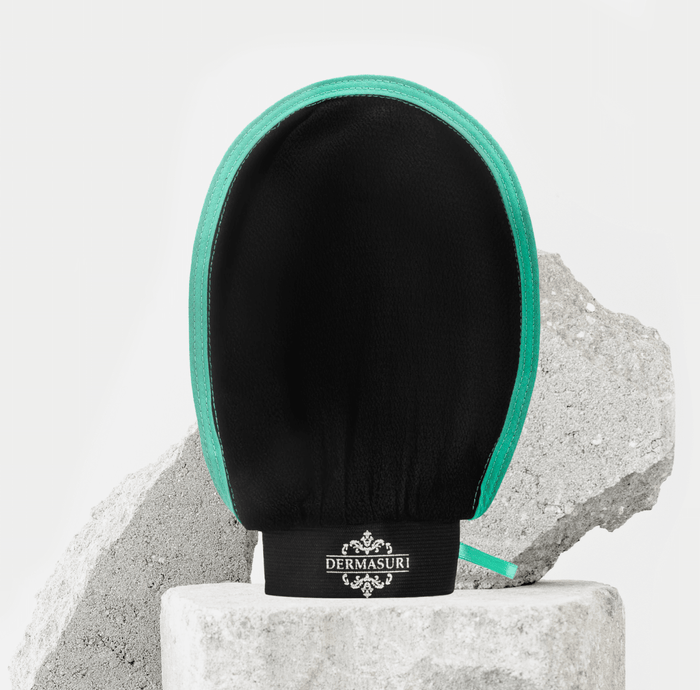
Next, use a body exfoliator that gives you real friction. A deep exfoliating glove or scrub mitt tends to work especially well because it can lift away dull, flaky skin fast and create that satisfyingly smooth finish self tan loves. Work in long, controlled motions rather than random harsh scrubbing. Focus on the body areas where self tanner tends to cling most: elbows, knees, ankles, feet, hands, and any rough patches on the arms or legs.
A glove like the Dermasuri Deep Exfoliating Glove Body Scrub works with water only. Use it on damp skin with no soap or body wash, since soap makes the surface too slippery to buff. Wash with your usual cleanser afterward, then rinse well.
You do not need to attack every inch of skin with the same intensity. That is where people get into trouble. Thicker, rougher areas can handle a little more pressure. Delicate spots like the chest or neck need a lighter touch. Think polished and even, not raw and squeaky.
If you prefer using a scrub, choose one that is not overly oily. Heavy residue left on the skin can interfere with how self tanner develops. The same goes for shower oils and rich body washes right before tanning day. Soft skin is great. Slippery film on the skin is not.
Which exfoliator works best before self tanner?
For tan prep, a water-only exfoliating glove or mitt is the simplest self tanner exfoliator, because it lifts dead skin without leaving anything on the surface. Scrubs and acids can work too, as long as you time them right.
| Method | What it leaves on your skin | When to use it before tanning |
|---|---|---|
| Exfoliating glove or mitt (water only) | Nothing but water | 12 to 24 hours before, on damp skin |
| Grainy body scrub | Often oils or butters | A day or two before, then rinse very well |
| Chemical exfoliant (acids) | No film, but skin can feel more sensitive | Only if your skin already uses it; skip anything new right before tanning |
| Dry brush | Nothing (used on dry skin) | Before a shower, a day or two ahead, to loosen dry flakes |
If you love a self tan scrub or a sunless tanner exfoliator that comes with your tanning kit, use it the same way: early enough that any residue is long gone by application time. For product picks, see the best body exfoliators for tanning prep.
Areas that need extra attention
The places that usually betray a self tan are not random. They are the spots where skin is naturally thicker, drier, or more textured.
Elbows, knees, and ankles
These areas absorb more tanner because they are dry by nature. Spend extra time exfoliating them, but keep it controlled. The American Academy of Dermatology gives the same advice: spend a little more time exfoliating where skin is thickest, on the elbows, knees, and ankles. If you scrub too hard, you can leave them irritated, which creates a different problem. Smooth them well, then plan to use only a light amount of tanner there later.
Hands and feet
Hands and feet can go from golden to obviously fake in one application. Exfoliate around the knuckles, cuticles, heels, and sides of the feet carefully. The backs of the hands, the wrists, and the tops of the feet are especially easy to over-tan, so give them the same care. If you have rough heels or calluses, deal with them before tanning day if possible. Freshly buffed feet look cleaner and help the color sit more naturally.
Underarms and bikini line
These spots can hold onto texture, trapped dead skin, and ingrown-prone buildup. Gentle exfoliation here can help create a smoother look, but this is not the place for aggressive scrubbing. Underarms also collect deodorant buildup, so clean them well before you tan. On the bikini line, exfoliate gently in the days before your tan instead of all at once, and never scrub over inflamed bumps or broken skin. For a full routine, see how to start exfoliating your bikini line without irritation. If you wax or shave these areas, give your skin time before applying self tanner.
Should you exfoliate your face before self tanning?
Yes, but not the same way you exfoliate your body. Facial skin is thinner and usually already part of a regular skincare routine, so less is more. If you use a face tan or bring body tanner slightly onto the jawline, make sure your skin is smooth and free from flaky patches around the nose, mouth, and chin.
A gentle face exfoliator or a soft exfoliating tool is enough. Keep your body glove off your cheeks and away from your eyes, and use a face-specific option like the Deep Exfoliating Face Scrub instead. Skip anything harsh that leaves your skin feeling stripped. If your moisture barrier is already struggling, tanning over irritated facial skin can make uneven texture stand out even more.
Shop the story
Shop all Deep Exfoliating Glove Body Scrub
 Deep Exfoliating Face Scrub
 4-1 in 1 Exfoliating Foot Scrub Kit
What to avoid right before tanning
Knowing how to exfoliate before self tanning also means knowing what not to do. The biggest mistake is mixing too many prep steps at once and hoping for the best.
Avoid heavy lotions, oils, and rich body butters immediately after exfoliating if you plan to tan soon after. They can block even absorption. Avoid exfoliating with products that contain strong acids right before tanning, especially if your skin is sensitive. Chemical exfoliants can be useful in a body care routine, but right before self tan they can make the skin feel reactive or uneven.
The same goes for retinoids and acne treatments. They can make skin more sensitive and may speed up fading, so do not start anything new in the days before a tan. If you love an oil-based scrub, use it a day or two ahead and rinse very thoroughly. And if your skin is sunburned, cut, or broken out with inflamed bumps, skip exfoliation there completely. The AAD’s at-home exfoliation advice is clear on this: never exfoliate over open cuts or wounds or sunburned skin.
Also skip deodorant, perfume, and body products on tanning day unless you know they play nicely with your formula. These can create little barriers or cause patchiness in certain areas. And if you are headed to the gym, sauna, or beach right after your prep shower, hold off. Sweat and humidity get in the way of even color.
How to tell if your skin is ready
Freshly prepped skin feels smooth, not slippery. It should look even, with no obvious flakes or rough zones, especially on the classic trouble spots. Run your hands over your arms and legs. If you can feel dry texture, your self tanner definitely will too.
Take two minutes to check your skin in good lighting. Look for leftover deodorant near your underarms, flaky spots on your shins, and old tan hiding around your knees and ankles. Then make sure you are fully dry. Behind the knees, inside the elbows, under the chest, and around the neck can hold onto moisture without you noticing.
This is also the moment to be honest about any current irritation. If your skin is red, itchy, or over-exfoliated, pause. A self tan always looks better on calm skin than on skin you tried to force into perfection at the last minute.
A better pre-tan routine for longer-lasting color
If you want your glow to really hit, start preparing a day or two in advance instead of doing everything in one rushed shower. Exfoliate thoroughly, shave if needed, and let skin reset. On tanning day, keep skin clean and dry. If you have extremely dry areas, use the tiniest amount of lightweight moisturizer only on those spots so they do not overdevelop.
This kind of prep does not need to be complicated, but it does need to be intentional. A good exfoliating ritual gives you that satisfying before-and-after moment where skin already looks brighter and feels softer before the tanner even goes on. That is why results-driven brands like Dermasuri put so much focus on the exfoliation step. The payoff is visible.
A self tanning prep routine example
Here is what a simple self tan prep routine looks like in real life.
The night before:
- Take a warm shower, not a hot one, and let your skin soften for a few minutes.
- Exfoliate from your shoulders down with a glove or mitt, slowing down on knees, elbows, ankles, feet, and hands.
- Shave if you need to, after exfoliating.
- Rinse, pat dry, and apply a light, non-greasy moisturizer to your dry spots.
Tanning day:
- Start with clean, completely dry skin.
- Skip deodorant, perfume, body oil, and heavy lotion on the areas you plan to tan.
- Add a whisper of lightweight moisturizer to hands, wrists, elbows, knees, ankles, and feet.
- Apply your self tanner.
That is the whole routine, and it is a long way from 14 steps. Smooth skin, smart timing, and a little restraint let the tanner do its job.
Do you moisturize before self tanner?
Yes, but only where you need it. Dry skin is the reason tanner goes rogue, so a light layer on elbows, knees, ankles, heels, knuckles, and wrists acts as a buffer that keeps those spots from soaking up too much color.
What you do not want is a thick layer from shoulders to toes right before tanning. That can block absorption and leave you with a lighter, patchier finish. If your skin is dry all over, moisturize consistently in the days leading up to your tan, use a light, non-greasy lotion the night before, and keep it minimal on tanning day.
Adjusting your prep for dry, oily, or sensitive skin
Not everyone’s prep looks the same. If your skin is very dry, lean into steady hydration in the days before you tan and extra care around rough areas. If your skin is oily, residue is the bigger issue, so make sure skin is freshly cleansed and free from product buildup.
If your skin is sensitive, go easier on exfoliation, use lighter pressure, and leave more time between exfoliating, shaving, and tanning. The guide to exfoliating sensitive skin covers how to adjust pressure and timing. If you are acne-prone on the body, keep your prep routine simple and skip heavy products before tanning.
And if old self tanner will not budge, be patient. Two gentler exfoliation sessions spaced over a day or two usually beat one aggressive scrub.
How to exfoliate before a spray tan
Spray tan prep works the same way as self tan prep. Exfoliate about 24 hours before your appointment, shave or wax at least a day ahead, and show up with clean, bare skin.
The active tanning ingredient in sunless tanning solutions is dihydroxyacetone, or DHA. It reacts with the dead skin cells on the surface, so thick, dry patches on knees, elbows, and ankles take on extra color, and an oily film from lotion or scrub can keep the solution from reaching your skin evenly.
Here is the timeline that works:
- Shave or wax 24 to 48 hours before, so your follicles have time to calm down.
- About 24 hours before, soak in a warm shower or bath for 5 to 10 minutes, then use a damp exfoliating glove with no soap or oil, paying extra attention to knees, elbows, and ankles. A back scrub or long exfoliating towel helps you reach the middle of your back.
- On the day of your appointment, rinse with warm water only. Skip body lotion, oil, perfume, deodorant, and makeup.
- Wear dark, loose clothing and open sandals, so nothing rubs against your fresh tan.
What happens if you do not exfoliate before a spray tan? The solution develops on an uneven layer of dead skin, so you get patchy color, dark spots on dry areas like knees and elbows, and faster fading as that skin sheds. And if you shave just a few hours before your appointment, the solution can settle into open follicles and leave tiny dark specks on your legs, or sting.
Can you exfoliate after self tanning?
Yes, but not while you want to keep your color. Self tanner lives in the same surface skin cells that exfoliation removes, so once your tan has developed, exfoliating will lift it. That is exactly why exfoliation is also the best way to remove an old tan.
While you are enjoying your color, switch from exfoliating to moisturizing. Long hot showers, rough towels, strong body washes, and frequent scrubbing can make a tan fade faster and less evenly. Use lukewarm water, pat dry instead of rubbing, and moisturize daily so your color fades softly.
When you are ready to remove the remaining tan and start fresh:
- Soak in warm water first to soften the skin.
- Use your exfoliating mitt with controlled pressure, working in sections and checking as you go.
- Give stubborn spots around the ankles, wrists, and knees another session the next day instead of chasing every last bit in one shower.
Tanning over leftover color rarely looks clean. Fresh color over old color tends to build up at the knees and ankles, so give your skin that reset before the next application.
How often should you exfoliate if you self tan regularly?
If self tanning is part of your routine, exfoliation should bookend the process. Do a thorough exfoliation before each fresh tan, then once the tan starts fading, exfoliate again to remove the remaining color cleanly before reapplying. In between, go easy. Over-exfoliating while trying to maintain a tan can create patchy fade and shorten wear time.
For most people, one deeper exfoliation before tanning and another when removing old tan is enough. If your skin is naturally dry or sensitive, spacing those sessions out matters even more.
A good self tan starts long before the mousse, mist, or drops touch your skin. It starts in the shower, when you take the time to smooth away the buildup, deal with the rough spots, and give your color a clean canvas. Get that part right, and the glow looks better, lasts longer, and feels a lot less like luck.