Key takeaways
- The best exfoliator for ingrown hairs depends on your skin, your hair type, and where the ingrowns show up.
- An exfoliating glove gives the fastest smoothing on the body, while acids like salicylic, glycolic, or lactic acid help with ongoing prevention.
- Exfoliate before hair removal, then wait 24 to 48 hours after shaving and roughly 48 hours after waxing.
- Once or twice a week is enough for most people, and a deep session with the glove only needs repeating every 2 weeks.
- Skip exfoliation on inflamed, cut, or sunburned skin, and see a dermatologist if bumps are painful, spreading, or keep coming back.
Ingrown hairs have a way of ruining the whole smooth-skin plan. You shave, wax, or epilate for smooth skin, and then a few days later you are dealing with red bumps, trapped hairs, rough texture, and that stubborn under-the-skin feel. If you are looking for the best exfoliator for ingrown hairs, the real answer is less about hype and more about matching the exfoliation method to your skin, your hair type, and where the ingrowns show up.
Some exfoliators help loosen dead skin so the hair can break through. Others keep pores clear so the hair does not get trapped in the first place. And some are simply too harsh for skin that is already irritated. That is why the best choice depends on whether you want instant smoothing, long-term prevention, or both.
What actually causes ingrown hairs?
Ingrown hairs happen when a hair curls back into the skin or gets blocked as it tries to grow out. Sometimes the trapped hair grows sideways under the surface instead of up and out. This is especially common after shaving and waxing, when the hair can have a sharper edge or struggle to push through a buildup of dead skin. Areas with friction, like the bikini line, underarms, legs, and beard area, are prime targets.
Texture matters too. Curly and coarse hair types tend to be more prone to ingrowns because the hair naturally bends as it grows. Dry skin, clogged pores, and heavy product buildup can make the problem worse. So can overdoing hair removal or using dull razors.
That is why exfoliation is such a big deal here. The right kind removes the layer of dead skin that traps hairs, smooths rough patches, and helps skin recover between hair removal sessions.
Summer tends to bring more of them. Heat means more sweat mixing with your skin's natural oils, tight swimsuits and activewear rub against freshly shaved skin, and most of us shave or wax more often once shorts weather arrives. Each of those gives a growing hair one more reason to get stuck.
Does exfoliating prevent ingrown hairs?
Often, yes. Exfoliating clears the layer of dry, dead skin that can sit over the follicle and trap a new hair, so the hair has a clearer path out. The Cleveland Clinic notes that exfoliating removes a dead layer of skin cells and helps release ingrown hairs.
What exfoliation cannot do is stop every ingrown. It handles one trigger: skin buildup around the follicle opening. Very close shaves, dull blades, tight clothing, and naturally curly or coarse hair can still send a hair back into the skin. Think of exfoliation as prevention and upkeep, not an emergency fix.
It also will not calm a bump that is already red, swollen, or tender. Scrubbing over an inflamed ingrown usually makes it angrier, so give that spot a break until it settles.
The same goes for razor bumps. Gentle exfoliation before you shave can help, but skin that is raw from a fresh shave needs time first. And if you keep getting ingrowns even though you exfoliate, look at the rest of the routine too: how you shave, how often, and what you wear afterward. Those habits are covered below.
The best exfoliator for ingrown hairs depends on the type
If you were hoping for one magic product category that works for everyone, here is the honest answer: it depends. The best exfoliator for ingrown hairs usually falls into one of two camps: physical exfoliants or chemical exfoliants. Both can work. They just work differently.
Physical exfoliators give the fastest visible payoff
Physical exfoliation uses texture to manually lift dead skin from the surface. Think exfoliating gloves, scrub mitts, body scrubs, and textured tools. For body ingrowns, especially on the legs, bikini line, and underarms, this is often the quickest way to get that instantly smoother feel. A dry brush, used on dry skin before you shower, is another way to loosen stubborn flakes.
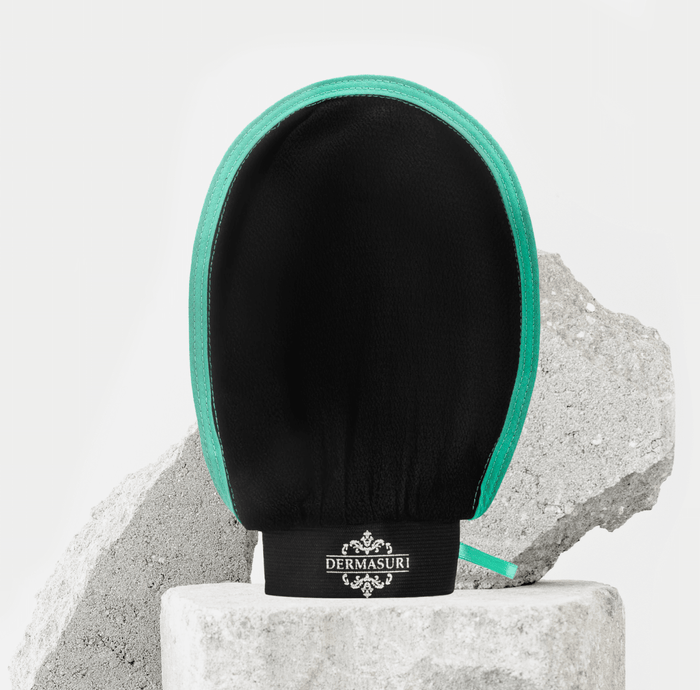
An exfoliating glove like the Dermasuri Deep Exfoliating Glove stands out because it does more than scatter a little scrub around the skin. It creates direct friction that helps slough off dead skin buildup in a more thorough way. That matters when hairs are getting stuck under a layer of rough, dry skin. You can literally feel the difference after one shower ritual when the surface feels softer, cleaner, and less congested.
The trade-off is that pressure matters. Too gentle and you may not get much payoff. Too aggressive and you can irritate skin that is already bumpy or freshly shaved. Physical exfoliation works best when used on the body with a controlled hand and not on compromised skin.
Chemical exfoliators are great for maintenance
Chemical exfoliants use acids to dissolve the bonds between dead skin cells. The most common options for ingrown hairs are alpha hydroxy acids like glycolic or lactic acid, and beta hydroxy acid like salicylic acid. These can be especially helpful if your ingrowns come with clogged pores, post-shave bumps, or rough texture that keeps returning.
Salicylic acid is often a smart pick for oily or congestion-prone skin because it can work inside the pore. Glycolic and lactic acid are useful for smoothing surface buildup and improving texture over time. Lactic acid tends to be the gentler choice for dry, rough body skin. They are not usually as instantly satisfying as a scrub mitt or glove, but they can be excellent for prevention when used consistently.
The catch is patience. Chemical exfoliants tend to be more gradual, and some formulas can sting on sensitive areas. If your skin is reactive, you may need to start slow.
So which exfoliator is actually best?
For most body areas where ingrown hairs show up, a physical exfoliating glove is the best exfoliator for ingrown hairs if your goal is immediate smoothing and visible skin payoff. It is simple, fast, and works especially well on dry, rough skin that is trapping hairs.
For ongoing prevention, a chemical exfoliant can be the better partner. If your skin gets clogged easily or your bumps keep coming back after hair removal, using a leave-on exfoliant a few times a week can help keep everything clearer between showers.
For many people, the sweet spot is not choosing one over the other. It is using physical exfoliation strategically and chemical exfoliation sparingly, based on how your skin behaves.
Here is how the main options compare:
| Exfoliator | How it works | How fast skin feels smoother | Irritation risk |
|---|---|---|---|
| Exfoliating glove or mitt | Textured fabric and water lift dead skin off the surface | Right away | Low to moderate, depending on your pressure |
| Sugar body scrub | Fine sugar crystals buff the surface while oils soften skin | Right away, with a lighter polish | Low (fine granules) |
| Coarse particle scrub | Larger particles buff the skin | Moderate | High on delicate skin, since particles can scratch |
| Chemical exfoliant (AHA or BHA) | Acids loosen the bonds between dead skin cells | Gradual | Moderate, and higher on freshly shaved skin |
If you are after the best body scrub for ingrown hairs, look for fine granules rather than large, jagged ones. The Dermasuri Sugar Body Scrub uses fine sugar crystals that melt in as you massage, along with hydrating oils, so it smooths without the scratchy feel of coarse particles. It is also made to pair with the Dermasuri glove: use the glove first with water only, then your body wash, then the scrub. The oils can make the tub slippery, so take care.
How to choose the best exfoliator for ingrown hairs by area
Legs
Leg skin usually tolerates more intensive exfoliation than delicate areas. If you deal with strawberry legs, roughness, or visible trapped hairs, an exfoliating glove or scrub mitt is often your best bet. It gives that polished, silky finish and helps prevent dead skin from sealing hairs underneath.
If your legs are also prone to clogged pores or post-shave bumps, adding a gentle chemical exfoliant a few times a week can help maintain results.
Bikini line
This area needs more caution. Ingrowns here are common, including ingrown pubic hair, but so is irritation. A gentle physical exfoliator can work well, especially before hair removal and a few days after, once the skin has settled. Harsh scrubs with large, jagged particles are not the move.
Chemical exfoliants can also help, but they need to be chosen carefully. Strong acids on freshly waxed or shaved bikini skin can feel brutal fast. For a step-by-step, here is how to exfoliate the bikini line without irritation.
Underarms
Underarms are tricky because the skin is thin, folded, and exposed to deodorant, sweat, and constant friction. A softer approach usually wins. Gentle physical exfoliation can help remove buildup and free trapped hairs, while a mild acid formula may support smoother texture over time.
If your underarms sting easily, focus on less frequent exfoliation and skip it right after shaving. If redness is part of the picture too, here is how to treat underarm bumps without making them worse.
Face and beard area
For facial ingrowns, especially in the beard area, chemical exfoliants are often easier to control than rough physical scrubs. The skin here can get irritated fast, and over-scrubbing can make razor bumps look worse. Salicylic acid is a common favorite for this reason.
If you prefer physical exfoliation on the face, it needs to be very gentle and not part of an aggressive routine. A tool made for facial skin, like the Dermasuri Deep Exfoliating Face Scrub, is a better fit than a body glove. It is designed for delicate facial skin, including the jawline and neck after shaving.
Shop the story
Shop all Deep Exfoliating Glove Body Scrub
 Sugar Body Scrub
 Deep Exfoliating Face Scrub
What makes an exfoliator worth it?
Not all exfoliators are created equal. If you are shopping for one that actually helps with ingrown hairs, look past flashy claims and focus on function.
A good physical exfoliator should remove dead skin without feeling like sandpaper. Texture should be firm enough to create results, but not so abrasive that it leaves skin angry. Traditional exfoliating tools inspired by hammam and Korean body rituals have a loyal following for this reason: they are built for that satisfying, visible skin reset.
A good chemical exfoliator should have a clear active ingredient, a strength you can tolerate, and a formula that does not leave your skin stripped. For ingrowns, more is not automatically better. The strongest acid on the shelf is not always the smartest pick.
How to use an exfoliating mitt for ingrown hairs
Exfoliating mitts and gloves can help prevent mild ingrown hairs and improve how they look by lifting the dead skin that traps a growing hair. The payoff comes from good timing and a light hand, not from scrubbing harder.
- Soak first. Spend about 5 minutes in a warm shower or bath so the outer layer of skin softens.
- Skip the soap for now. Wring the mitt out until it is damp, not dripping. The Deep Exfoliating Glove works with water only, because soap, oil, and body wash add slip and keep it from gripping. The Two-Sided Exfoliating Glove is the exception, since it is made to use with your cleanser.
- Step out of the water stream and sweep the mitt over damp skin in long strokes or small circles. On legs and arms, work upward. Keep the pressure extra light on the bikini line and underarms.
- Rinse away the rolled-up dead skin, then wash with your body wash as usual.
- Moisturize while skin is still slightly damp, using a simple, fragrance-free lotion.
Use the mitt before shaving, not right after. If your skin turns bright red, feels hot, or stings afterward, ease up next time. For the full rundown, including glove care, here is how to use exfoliating gloves from start to finish.
How to exfoliate without making ingrown hairs worse
This part matters. Exfoliation can help ingrowns, but poor timing and too much enthusiasm can backfire.
Use physical exfoliation before shaving to remove dead skin and help the razor glide more cleanly. After shaving or waxing, give skin a little time before exfoliating again, especially if you are prone to redness. Pressing hard on freshly hair-removed skin can turn a smooth-skin moment into a stingy mess.
Keep your body exfoliation routine consistent, not aggressive. Once or twice a week is enough for most people, and a deep session with the Dermasuri Deep Exfoliating Glove only needs repeating every 2 weeks. If you are using chemical exfoliants too, space things out. You do not need an exfoliating glove, an acid toner, and a body scrub all in the same day.
Hydration helps too. Skin that is soft and moisturized is less likely to trap hairs than skin that is dry and tight. Exfoliation gets the spotlight, but moisture is part of the whole smooth-skin equation.
When to exfoliate around shaving and waxing
Exfoliate before hair removal, not right after it. Here is the timing that keeps skin calm:
- Before shaving, exfoliate the day before. If your skin is not sensitive and you keep the pressure gentle, a few hours before works too.
- After shaving, rinse, pat dry, and moisturize. Wait 24 to 48 hours before exfoliating again, and only once there is no stinging, redness, or visible irritation.
- After waxing, wait a little longer, roughly 48 hours. The follicle is more exposed once hair is pulled from the root, so a scrub right after a wax can sting.
- Do not stack methods. An acid treatment, a scrub mitt, and a close shave on the same day is a fast track to irritated skin. Alternate them instead, and keep acids off freshly shaved, waxed, broken, or sunburned skin.
Hair removal habits that matter just as much
If your shave keeps causing bumps, exfoliation is only half the answer. The American Academy of Dermatology recommends shaving in the direction your hair grows and replacing a disposable razor after 5 to 7 shaves. It also suggests shaving at the end of your shower, when the hair is softer, and always using a moisturizing shaving cream.
One or two passes over an area beat going back again and again. After shaving the bikini area, loose, breathable clothing gives skin room to calm down. If you want the whole plan in one place, from prep to aftercare, follow this ingrown hair prevention routine.
Common mistakes when choosing an exfoliator
One mistake is using a facial exfoliant on the body and wondering why nothing changes. Body skin, especially on the legs, often needs a stronger physical approach than the face.
Another is choosing a scrub with oversized particles that feel dramatic but do not exfoliate evenly. That kind of formula can scratch the skin without doing much for trapped hairs.
The biggest mistake, though, is treating every bump like an ingrown hair. Some are razor burn, some are clogged pores, and some may need a dermatologist if they are painful, infected, or keep returning in the same spot.
When to skip exfoliation and see a dermatologist
Skip exfoliation over any spot that is cut, sunburned, raw from razor burn, flaring with eczema or a rash, or open, swollen, or tender. Exfoliation is for keeping healthy skin smooth, not for working on a bump that is already inflamed.
If you spot an ingrown hair, resist the urge to dig, squeeze, or tweeze it. That can bring in bacteria, cause discoloration, or leave a mark that lasts much longer than the bump itself. Use a warm compress, pause hair removal and exfoliation on that exact spot, and let the hair work its way out.
Not every post-shave bump is an ingrown hair, either. Folliculitis, contact irritation, acne, or infection can look similar. See a dermatologist if bumps are painful, spreading, keep filling with pus, leave scars or dark marks, or do not improve after a few weeks of gentle care.
The real answer to smoother skin
If your skin gets ingrown hairs often, the best exfoliator is the one you will actually use consistently and correctly. For fast, touchable results on the body, a good exfoliating glove is hard to beat. For maintenance and bump prevention, a well-chosen acid can earn its place. And if you want that wow, where-did-all-that-dead-skin-go moment, this is exactly the result Dermasuri built its exfoliation rituals around.
Smooth skin is rarely about doing more. It is about doing the right thing at the right time, then letting your skin breathe, reset, and show off a little.